Same business. Different numbers.
Finance says gross margin is one thing, Sales says another and the board pack shows a third. Reperta lines up every version side by side, so the owner can agree what the number should mean.
Sound familiar?
"Why doesn't this match Finance's figure?"
The first item at every review is explaining why two numbers that should match do not. The real discussion starts late, if at all.
"It depends which spreadsheet you open."
The same KPI is calculated in many places, each with its own constant or filter, and the differences surface at quarter end.
"Nobody owns the definition."
Each team keeps its own version. With no owner to say which is right, every version survives.
How Reperta helps
- 1
Find every version
Reperta reads how each report calculates its numbers and lines up the different versions of the same metric.
- 2
See what each version feeds
Every report using each definition is listed, so you see the knock-on effect of a choice before you make it.
- 3
Agree it and sign it off
The owner picks the definition, records why and signs it off. Reports using the other versions are queued to fix.
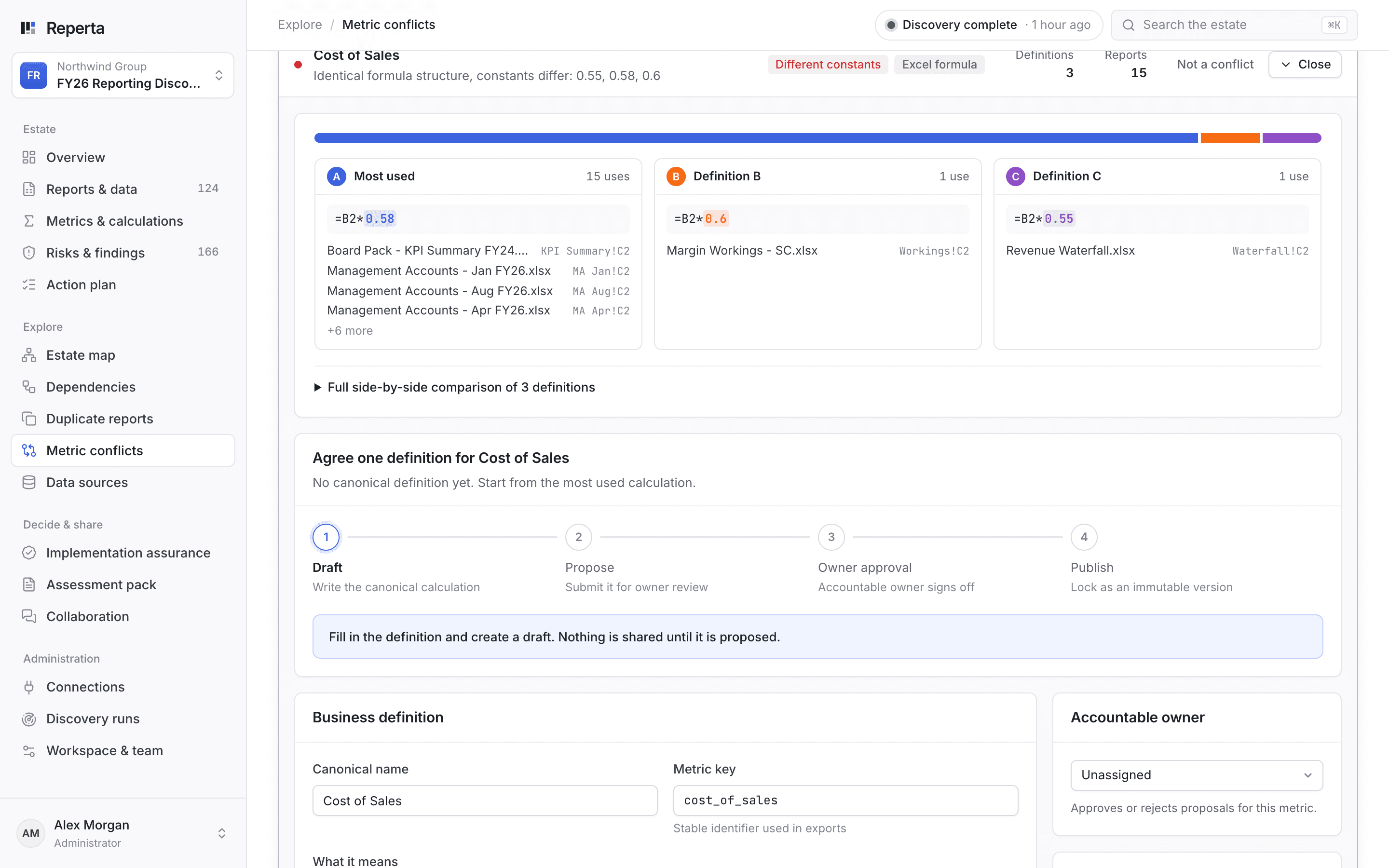
Every version of a metric, side by side. Three calculations of Cost of Sales, the reports that use each one, and a sign-off workflow for the owner.
Northwind: four kinds of gross margin
At Northwind Group, Gross Margin was defined 4 different ways across 15 reports. Cost of Sales was =B2*0.58 in the board pack, =B2*0.6 in Margin Workings - SC.xlsx and =B2*0.55 in Revenue Waterfall.xlsx.
What you get
- Every conflicting metric, with each version side by side
- The reports affected by each definition
- One agreed definition per metric, with the reasons recorded
- A named owner and sign-off for each definition
- A fix list for the reports that disagree
Questions
Will Reperta tell us which definition is right?
It shows each version, where it is used and what it feeds. The owner decides, and the decision is recorded.
How does Reperta check whether the numbers agree?
It compares the calculations and the underlying results against the agreed definition. Your team sets the periods and tolerances, then reviews any differences with the evidence attached.
What happens once a definition is agreed?
It is versioned with its owner and sign-off, and reports using other versions are listed as fixes. If you are moving platforms, the new reports are built on the agreed version.
Related guides
Why your numbers don't match: one KPI, four definitions
How one KPI drifts into several definitions across the business, why that becomes a programme risk during a transformation, and how to get to one agreed number.
Read the guideKeep, fix, retire or rebuild: a decision framework for reports
A simple framework for deciding what each report deserves, the evidence to ask for behind every verdict and how to get owners to commit.
Read the guideOther places teams start
All use cases- AI-built dashboardsFaster dashboards still need agreed numbers
- Ongoing reporting healthStay right as reporting changes
- Dashboard sprawlKnow what you have before you build more
- Spreadsheet reportingFind the workbooks the business runs on
- Fixing known problemsTurn findings into fixes that stick
- ModernisationDecide what to keep, fix, retire or rebuild
- Moving to Power BIMove what matters and leave the rest behind
- Retiring SSRSSwitch off the old server without surprises
Bring the number nobody can explain.
Book a 30-minute demo. We will show you how Reperta finds what is behind it, fixes it and keeps it right.